D. R. Martin & Richard Audry Books


Leave a comment

A New Cover for Mary MacDougall

Though I was reasonably satisfied with the cover I concocted for my first Mary MacDougall mystery novella, I knew that a pro could do a lot better. So I decided to splurge and put Steve Thomas on the job. Here’s what he came up with.

PrettyLittlePlot_cover_small vers

All that I did was provide him with some samples of cover looks that I liked, and a disk of public domain art from Dover and Atheneum. He did all the rest, and I’m delighted with it. Steve is also an artist who does terrific retro style poster art; the same style he used for both Johnny Graphic covers. Check out his stuff here.

Anyway, thanks for the great work, Steve.


1 Comment

Adios, Fiver

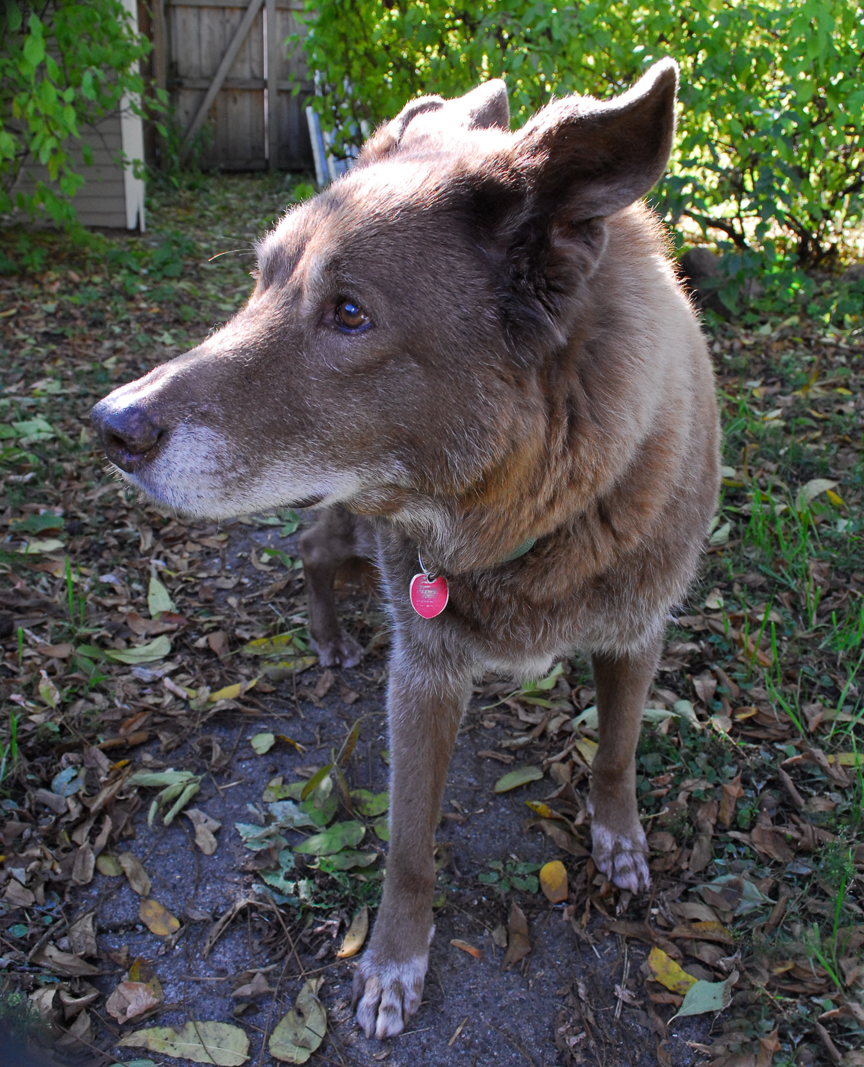
Of the books I’ve written, perhaps my favorite is The Karma of King Harald, which recounts the misadventures of a crime-sniffing canine and his human. If I could get one series really rolling, this would be it. It’s also my favorite cover from among the seven titles we’ve published so far. And it’s such a fun cover, because of a dog called Fiver–our model for King Harald.

I got the distinct impression Fiver didn’t enjoy being in the spotlight. The dog was positively camera shy. He had all sorts of moves to get out of the frame. It wasn’t as though he was mad or anything. It was just more apologetic and a little hang-dog: Nothing personal, but I really, really wish you’d stop following me around snapping that thing.

But if you take a few hundred shots of a good-natured but shy dog, you’re still apt to get some that work. And I was able to. Here’s one of Fiver from our last photo shoot in October.

Fiver

Sadly, Fiver passed away a couple weeks ago at the age of 15. It is certainly a tough transition for our friend Kelly–who shared that big, beautiful house with Fiver for many years. Any time a beloved animal friend leaves us, it leaves a hole in our heart that’s tough to fill.

Sue and I are so grateful that we got to meet Fiver and make him a cover boy.


Leave a comment

Smoking Ruin on Sale for 99 cents

This is just to give a heads up that my first-person PI mystery, Smoking Ruin, is on sale for only 99 cents at various e-book outlets. Here’s the link to the promotion via eBookSoda, a new site that offers special deals on e-books. I plan on leaving the cost at 99 cents for the next few weeks, even if eBookSoda notes that the deal has expired.


5 Comments

Ebelskivers!

Blogger’s Note: The last ebelskivers of the season will be served at the DAC this coming Sunday a.m., May 11. It’s located at Lake St. and West River Rd. in Minneapolis. Don’t miss ’em!

Not too far from where I live, overlooking the west bank of the Mississippi, is the Danish American Center–where Danish heritage is celebrated. (Though happily not celebrated in the manner seen in the country’s most famous export, The Killing.)  On one Sunday morning a month, through the cold seasons, the center puts on a Danish breakfast featuring ebelskivers. Think church pancake breakfast without the church.

What in the world are ebelskivers? you ask.

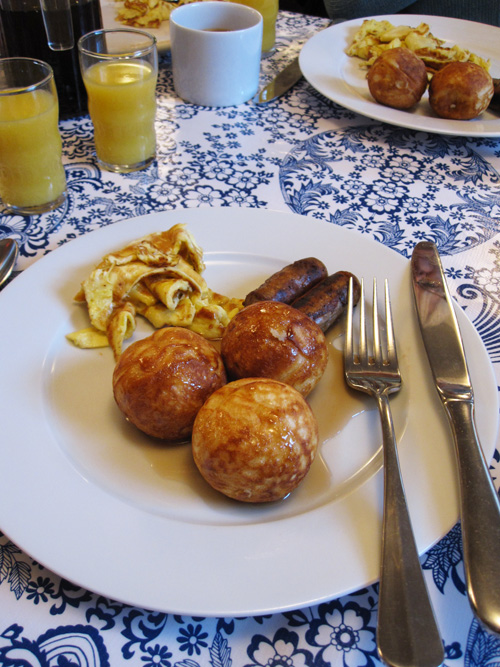
Well, ebelskivers are simply Danish spherical pancakes, as you can see on my breakfast plate this morning. They’re fried in special pans and take a little bit of skillful touch to make.

Ebelskivers_edited-1

The very friendly volunteer waitpeople at the Danish center will keep bringing  your ebelskivers and eggs and sausage until you whimper “Uncle” or your stomach bursts. Are they better than plain old pancakes? Not really, but they still taste darned good and the $8.50 all-you-can-eat breakfast is a pretty fine deal. You betcha. You can track down the ebelskiver schedule at http://www.dac.mn/.

So why a post on ebelskivers? I’ve got a soft spot for them, since they figure importantly in my canine cozy mystery, The Karma of King Harald. It’s by hunting down a legendary ebelskiver recipe that my hero Andy Skyberg  identifies the serial killer haunting Beaver Tail county.

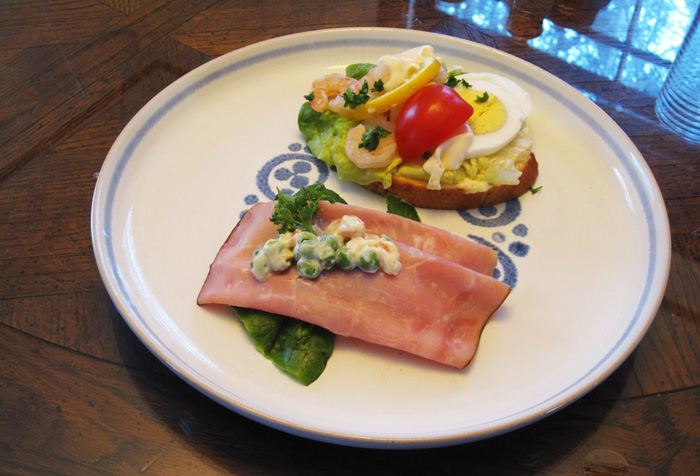
On the way out of the Danish American Center, Sue and I also happened across a caterer who was selling those scrumptious little Danish sandwiches, aka smørrebrød. Well, we couldn’t resist.

DanishSandwiches_edited-1


Leave a comment

What I’m Reading…

index

My primary blog these past few years has been Travis McGee & Me, devoted largely to the adventures of that timeless Florida tough guy. One of the great regrets of McGee fans, though, is that the author’s estate is dead set against reviving the franchise. Happily, not all literary estates feel the same way.

Tony Hillerman’s Leaphorn and Chee stories were not only page-turning whodunits, but wonderfully written. IMO, they capture the cultural, social, ethical, and religious qualities of the Navajo people wonderfully. They vividly depict the geography, geology, and meteorology of the Four Corners region. I can think of few other mystery series where the environment and landscape are always such key characters.

The good news is that the Hillerman estate didn’t like the idea of permanently silencing Lt. Leaphorn, Officer Chee, and Officer Manuelito. So, Anne Hillerman has taken up the challenge of reviving her father’s franchise with Spider Woman’s Daughter.

The novel revolves around the attempted murder of Joe Leaphorn, now retired but consulting with a local museum of Anasazi art. The primary POV is that of Bernie Manuelito, now married to Chee. She is the daughter of Spider Woman, a character out of Navajo mythology. To figure out who shot Leaphorn and why–an assault to which she was the only witness–Bernie needs to dig into the legendary lieutenant’s history and the arcane but passionate field of the study of ancient Anasazi pottery. In the end, she and Chee barely escape with their lives.

It’s perhaps unreasonable to think that any new writer can perfectly capture the voice of a beloved author who is gone. But I think in this case, Anne Hillerman comes close. She does justice to her father’s characters and fictional world, promising a bright future for this significant mystery series. I know that I’ll certainly want to read more.


Leave a comment

Daylight

painterforblog

It’s funny how, descending into winter, a temperature of 40 degrees at the beginning of November is dismally depressing…but 40 degrees on the 9th of March, after a long brutal siege of snow + ice + many subzeros is joyous and liberating and uplifting. Guess it’s always more fun seeing daylight at the end of the tunnel, than dark at the beginning. Anyway, here’s a summer shot from the Harriet Rose Garden in Minneapolis, from a garden book  I did photos for a few years ago. Summer is coming!


Leave a comment

Happy 100th, Leica!

It was a hundred years ago this month that the very first Leica camera made its appearance, reinventing photography in a stroke. Using 35mm movie film, the tiny, quiet camera with the exquisitely sharp lens allowed photographers to go anywhere, shoot anything, with a minimum of fuss and a modicum of anonymity. Much of the great photojournalism of the 20th century was made with Leicas. (The name is a mashup of Leitz Camera.) Here’s a great overview of the camera and its anniversary from the UK’s Telegraph.

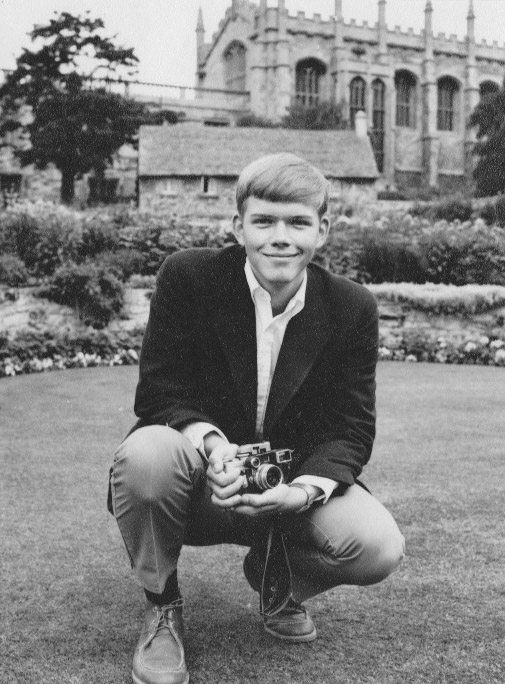
Back in the day, I fancied myself a street photographer in the mold of Henri Cartier-Bresson, the doyen of street photography. And at a certain point I knew I had to have a Leica. I found mine in a camera store on Minneapolis’s Nicollet Mall. It cost $250. Here I am a few months later in Oxford, with my M3. I still have it. Behind me is the Christchurch College dining hall, which a few years ago filled in for the Hogwarts dining hall.

dratoxford


1 Comment

Dolce Domum

All writers start out as readers. And that was my beginning as well.

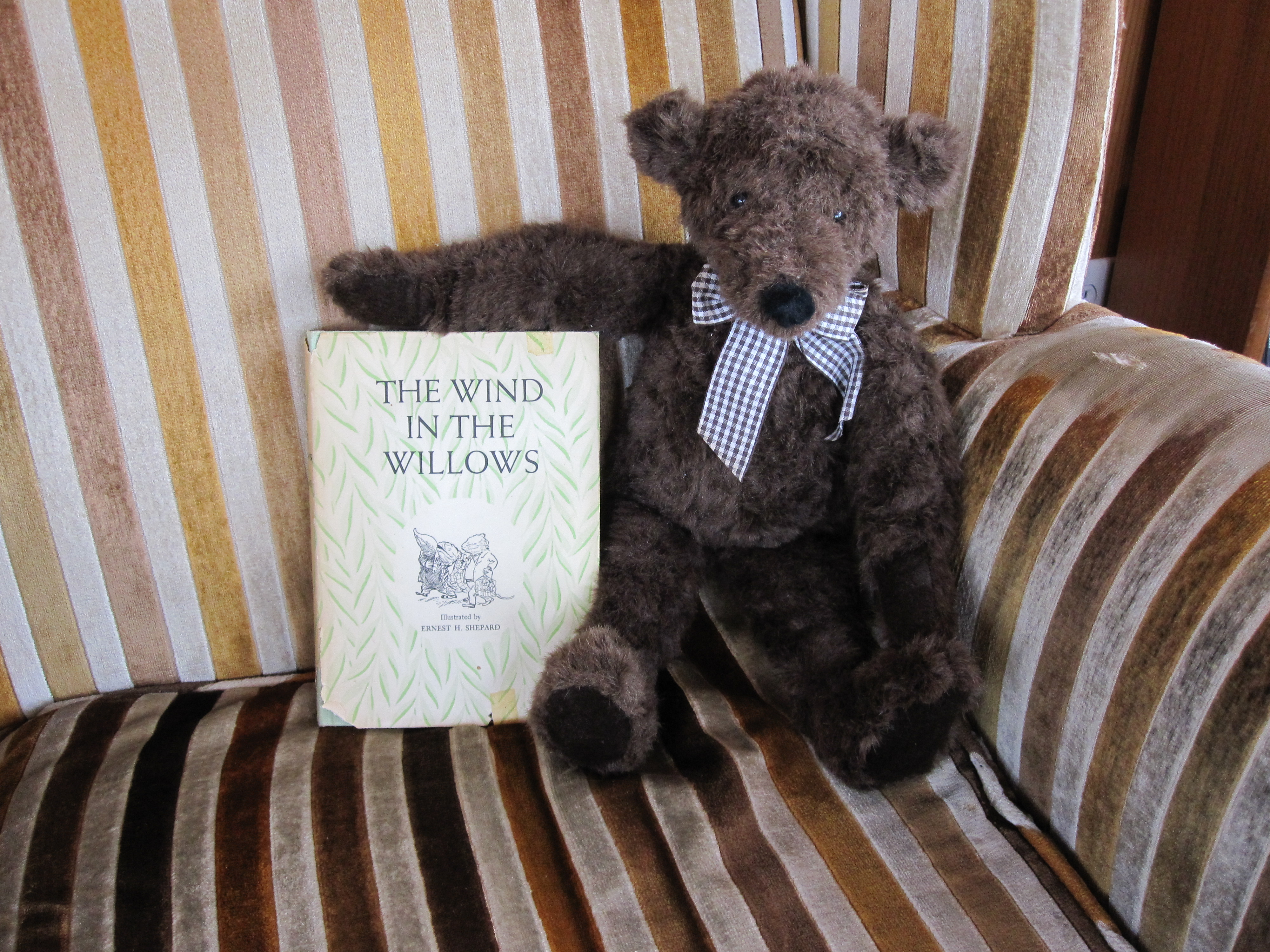
As a very young reader, I loved picture books, and even have a couple left from those early days. But I really became a fanatic reader when I graduated to chapter books (mostly without illustrations). It was while reading a Hardy Boys mystery that it struck me–someone had to write these things. And maybe I could be like Franklin W. Dixon (the author). But I really didn’t take it to heart until I encountered the book that changed my life–The Wind in the Willows. This is the actual, tattered copy I read as a kid.
IMG_0937

This story of Rat and Mole and Toad and Badger was, to me, magical. How could anyone conceive such a world and make it so vivid, so real? If I could do that, I’d never ask for another thing in my life.

I have been fortunate to be able to make a living as a journalist and copywriter over the years. But my goal has always been to write novels. And now I’m devoting my full attentions to it. Here you’ll see the four novels and one novella that I’ve published through Conger Road Press, plus two works of literary journalism. Hopefully, there’ll be three more books published this year. The next novella should be out by summer.

So what better way to start my first blog here than to acknowledge one of my biggest inspirations–Wind in the Willows. The chapter Dolce Domum, “Home Sweet Home”–where Mole sniffs out his abandoned abode as he and Rat are trudging through a snowstorm–is still the most exquisite piece of fiction I’ve ever read.

Well, I haven’t achieved what Kenneth Grahame did. Nor am I ever likely to. But I’ve never stopped trying.

Here’s one of my favorite quotes from the chapter:

The weary Mole also was glad to turn in without delay, and soon had his head on his pillow, in great joy and contentment. But ere he closed his eyes he let them wander round his old room, mellow in the glow of the firelight that played or rested on familiar and friendly things which had long been unconsciously a part of him, and now smilingly received him back, without rancor. He was now in just the frame of mind that the tactful Rat had quietly worked to bring about in him. He saw clearly how plain and simple—how narrow, even—it all was; but clearly, too, how much it all meant to him and the special value of some such anchorage in one’s existence. He did not at all want to abandon the new life and its splendid spaces, to turn his back on sun and air and all they offered him and creep home and stay there; the upper world was all too strong, it called to him still, even down there, and he knew he must return to the larger stage. But it was good to think he had this to come back to, this place which was all his own, these things which were so glad to see him again and could always be counted upon for the same simple welcome.