D. R. Martin & Richard Audry Books


1 Comment

Frederik Pohl’s Definition of a Good Editor

I just sent the manuscript of my third Mary MacDougall adventure off to my beta readers and my editor. This book is a full-length novel, in which my plucky heroine goes on vacation with her aunt Christena in the summer of 1902. Their destination is Mackinac Island, but along the way Mary stops to do a little detecting on behalf of her first paying client.

Did the woman’s mother really die in the fictional town of Dillmont, Michigan? Or, to paraphrase the Bard of Avon, is there something rotten in Dillmont?

My beta readers are friends whose taste and insights I trust implicitly. From them, I will get the reactions of dedicated book lovers. Although they are always diplomatic in their criticism, they will, in the end, tell me what worked and what didn’t work for them.

My editor Marlo will do a much more thorough review. She will dissect the various plot points and help me hone in on what needs improvement and why. I always learn something new from each of her critiques, and I try to carry that knowledge over into the next book writing project.

Every time I send out a new book for editing, I’m reminded of an interview I did with Frederik Pohl, the great science fiction writer and editor. He talked about the necessity of being edited by someone who is merciless—“the person who looks for your weak spots and jabs you where it hurts.” The editor, he implied, is your very necessary adversary. And he said that knowing editors too long or becoming too friendly with them made it difficult “to get the final acerbic, violent response that is useful.” (You can read the entire interview in my ebook Four Science Fiction Masters.)

I do believe that the pain I might feel at a thorough scrubbing of my prose will, in the end, make it a stronger final product. You’ll be able to judge how well the process went when the third Mary debuts early next year. I have a wonderful cover which I will show you soon.
Leave a comment

Philip Marlowe in a Time Warp

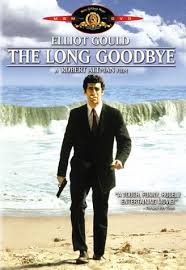
The Long Goodbye was Raymond Chandler’s favorite from among his novels. It was not made into a film until 1973, when Robert Altman tackled it. A few days ago I pulled it off my DVD shelf, and Sue and I watched it for the fifth or sixth time. I had forgotten how much I loved this movie. And a great thing about the DVD is that it came with interviews of Altman and Elliot Gould, who played Philip Marlowe

Now a lot of folks don’t like Robert Altman’s revisionist take on the Chandler classic. But when Altman explains it in one of the extras, it makes sense. He reset the murder mystery twenty years after the book was published (1953), with gumshoe Marlowe as “Rip Van Marlowe,” turning up in the hip, glib, go-go early ’70s. Marlowe even drives a 1948 Lincoln (that Gould owned). Moreover, the provenance of the script is impeccable—by Leigh Brackett, who wrote the script for The Big Sleep (1946), starring Bogie and directed by Howard Hawks.

index

Marlowe’s friend Terry is accused of murdering his wife, but turns up dead himself. Marlowe sets out to prove his friend’s innocence—running afoul of many shady and corrupt characters. There’s the drunk, impotent novelist who can’t write, and his gorgeous, inscrutable wife. There’s the gangster who wants back the 350 grand that Terry stole from him. There’s the treatment center shrink who is owed money. There are lots of cynical cops. The space-cadet neighbor gals who meditate topless. Marlowe ends up in the clink, gets beaten up repeatedly, tries to stop a suicide, loses his cat, and finally figures out what Terry did, and with whom. It’s noir of the highest order, though not in the traditional style.

The cast is to die for. Elliot Gould is an eccentric, laid-back Marlowe—a far cry from the tough guy in the trench coat and fedora. Sterling Hayden  gives a raw, powerful performance of the drunken Hemingway-like novelist who is crashing. He steals every scene he’s in. The actor/director Mark Rydell is remorseless and scary as the gangster, especially when he uses his girlfriend’s face and a broken bottle to motivate Marlowe. Henry Gibson (of Laugh In fame) is the uber-creepy little shrink. Major league pitcher Jim Bouton plays the venal, slippery Terry. Nina Van Pallandt plays the novelist’s panicked, stressed-out wife. And one of the gangster’s muscle-bound thugs is none other than former Governor Schwarzenegger—who doesn’t even get a line.

As we were watching the film, I reminded Sue that we attended a screening of it about fifteen years ago at a theater near the campus of the University of Minnesota. The movie was followed by a Q&A with the star, Elliot Gould. We both remember that he was a little crotchety, which would be in keeping with his reputation. It was a treat to see him in person and hear his recollections of making this terrific flick.


Leave a comment

Life in the Musical Trenches

Recently Sue and I watched a mini-film festival of documentaries about the musicians who help turn the stars into stars—the session players and backup singers who provide the textures and the licks that burn pop, R&B, and rock tunes into our heads. They were very often the secret sauce that made hundreds of wonderful hits so tasty and hugely popular.


index1

The first and oldest film was Standing in the Shadows of Motown (2003), about the guys collectively known as the Funk Brothers, who played in the “Snake Pit” in that dumpy house in Detroit called Hitsville U.S.A. (I visited Hitsville years ago, and “dumpy” about says it.) Most of them are gone now, but it’s awesome to see this crew—in c. 2000 and older footage—talk about working with everyone from Smokey Robinson and Marvin Gaye to Michael Jackson and the Supremes. These guys had more #1 hits than Elvis, the Beatles, the Stones, and the Beach Boys combined.


images2

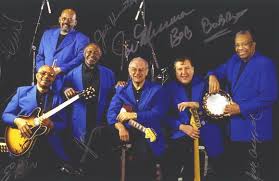
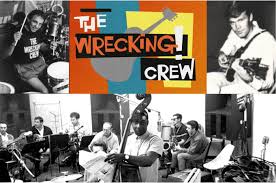
The Wrecking Crew (2008) is about the great session musicians of L.A. in the ’60s through the ’80s. The film was made by Denny Tedesco, son of Tommy Tedesco, one the great studio guitarists. It’s as much a love letter to the father from his son as it is a retelling of the Wrecking Crew’s history. And because of that, it’s a little slow at times. But there’s still tons of footage of the Crew working with the stars of the day. From Sinatra and Dino to the Beach Boys (Pet Sounds) and the Monkees. Usually,  guys (and the rare gal) who played backup in the studio never rose to stardom. But one Wrecking Crew member broke through the ceiling—Glen Campbell.


images3

Twenty Feet from Stardom (2013) follows the history and fortunes of the singers who back up pop and rock and R&B royalty. They’ve appeared with the Stones and Springsteen and Michael Jackson and many others—practically up there in the spotlight. They’ve cut their their own albums. But none of the ladies shown here could make the move from backup to star. Still, they’re amazing singers and their stories are fascinating. Sue and I found Lisa Fischer especially intriguing (she’s the gal on the right). She glams up to appear with Mick (every Stones tour since ’89), but on the street she looks like a perpetual grad student.

images4

Back beginning in the ’60s, an improbable location down south was cranking out the hits from two competing studios. It’s the subject of the mesmerizing documentary Muscle Shoals (2013)—dramatically and visually the best of these four films.

The first Muscle Shoals, Alabama, studio was Rick Hall’s FAME. And the dominant plotline of the movie is Hall’s rise from abject poverty and personal tragedy to the heights of the pop music world. He recorded R&B hits from Percy Sledge, Wilson Pickett, Aretha Franklin, Clarence Carter, Otis Redding and others. He moved on to pop stardom with the Osmonds, Paul Anka, Tom Jones, and Donny Osmond. He created a string of country hits, too. In the late ’60s members of FAME’s house band, the Swampers, split off to form Muscle Shoals Sound. They played for and recorded with Cher, the Stones, Paul Simon, Rod Stewart, Bob Dylan, Lynyrd Skynyrd and many others.

I can’t think of any better way to show how hits used to be made—and sometimes still are made—than these four gems about life down in the musical trenches.


Leave a comment

A Half-Century of Dune

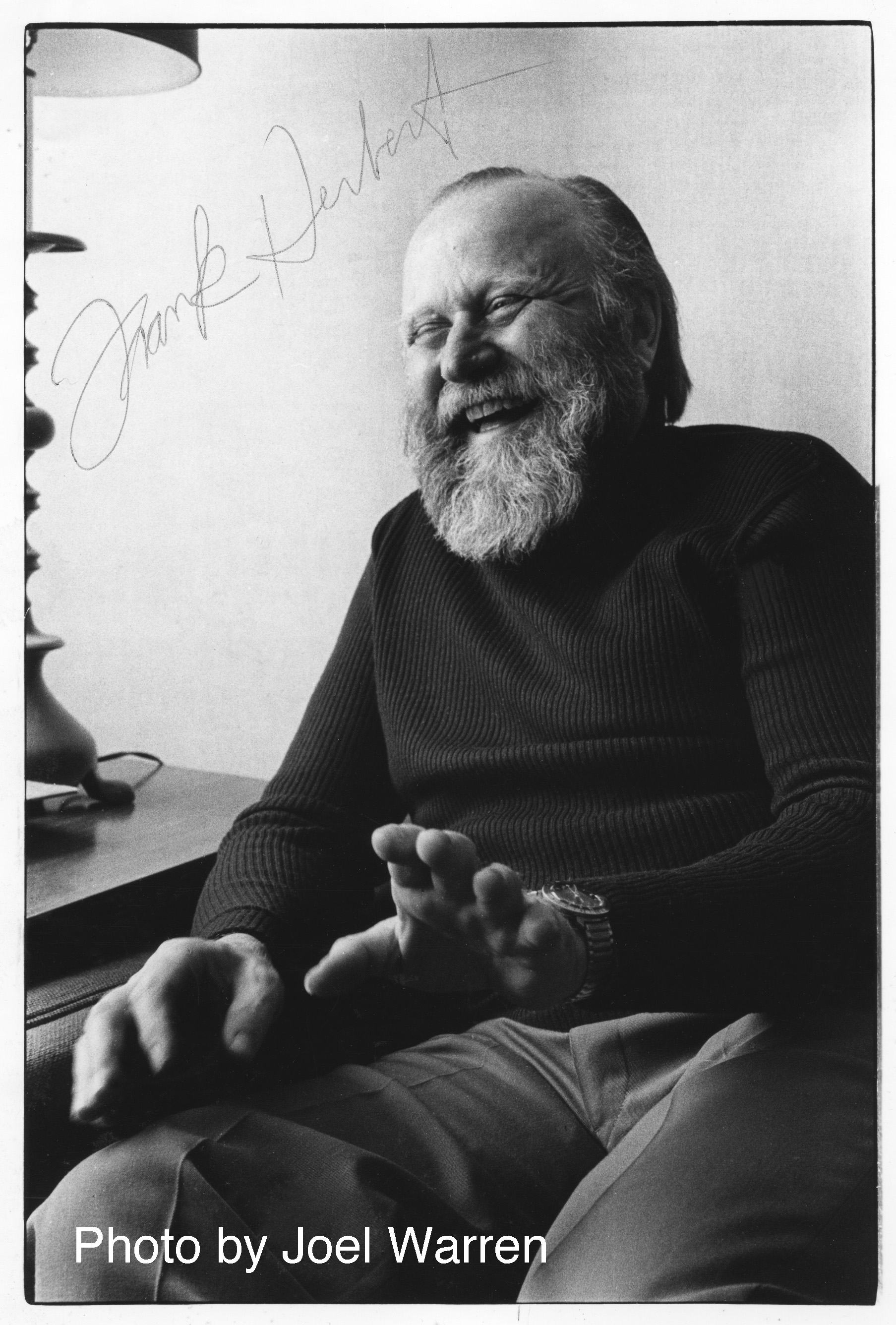
FrankHerbert copy 2Frank Herbert, Author of Dune — March, 1977

It’s been fifty years since one of the most popular and revered of all science fiction novels was published—Frank Herbert’s Dune. In addition to being a rip-roaring epic of galactic empire and Machievellian politics, Dune was a clarion call to pay attention to the ecology of the planet that the human race occupies. In its riveting portrayal of the desert planet Arrakis, we got to see a reflection of our treatment of Earth.

I pretty much only read SF in those days and I caught up with Dune five years after its publication. It was a terrific yarn and an exercise in world-building second only to Tolkien’s Middle Earth. I was so engrossed, I read its huge bulk in about two days—and I’m a pretty slow reader. Amazingly, Herbert’s manuscript was rejected by dozens of New York publishers. The book was ultimately published by Chilton, which had never before issued a novel because Chilton specialized in auto repair manuals.

In 1977, when I was the Editor of the Twin Cities Reader, I had the opportunity of a lifetime. Frank Herbert was coming to town on a book tour and I assigned myself the interview. I spent four hours with him on a cold, rainy March afternoon—lunch in the old North Star Room, the interview in his hotel room, and a walk in the rain. He was a gregarious, funny, ferociously smart man and I enjoyed every minute of our little encounter. The published interview and the raw interview are both in my book Four Science Fiction Masters. You can read the opening in the sample on its Amazon page. The picture of Herbert above was taken during the interview.

There’s been some good coverage of Dune and Herbert in the press lately. Here are three articles worth checking out:

To read the Guardian article, click here.

To read the Flavorwire article, click here.

To read the Nautilus article, click here.


Leave a comment

Douglas Adams & Last Chance to See

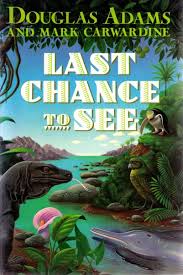
In my quest to reduce the sheer volume of stuff in my house, I periodically attack the lowest hanging of “fruit,” so to speak: I get rid of books, CDs, and DVDs. Not too long ago I was digging through a crowded bookshelf, deleting items, when I came upon a beloved old friend that I couldn’t possibly stick in the sell bag. It’s Last Chance to See by Douglas Adams, The Hitchhiker’s Guide to the Galaxy guy.

index2

Written about ten years before Adams’s untimely death in 2001 (at only 49!), it follows his globe-spanning adventures with naturalist/photographer/co-author Mark Carwardine, as they sought out legendary animals threatened with extinction. It’s a wonderful, bittersweet, uplifting, gut-bustingly hilarious account of how various endangered creatures were doing at that time. Adams and Carwardine checked in with the Komodo dragon, Chinese river dolphins, northern white rhinos, and the endearing but inept flightless kakapo parrot of New Zealand—among others. If you love animals and haven’t read it, get cracking.

index

Last Chance to See was a special book for me in terms of my career, too. In ’92 I was seriously underemployed and a gig writing PR copy for the PBS show Newton’s Apple came my way. But I needed to provide a sample of humorous writing. I was tearing my hair out (I still had some then) and I thought of my review of Last Chance that I wrote for the Minneapolis Tribune. My review was funny because the book was funny. Apparently the folks at Newton’s Apple were tickled by it, and it got me a nice annual project on a national TV show for five or six years.

Just in the last month, I discovered that Adams’s old friend Stephen Fry had teamed up with Carwardine a few years ago to revisit the animals from the original journey in a TV documentary. Sue and I watched the show and it was delightful. But things are apparently not so delightful for creatures like the river dolphin and the northern white rhino. They were nowhere to be found.

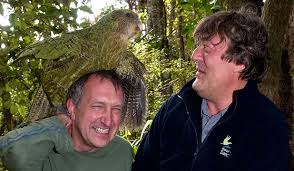
However, the kakapo is soldiering on, inhabiting an island stripped of all cats, dogs, rats, weasels, and other western imports that brought them close to extinction in the first place. (A kakapo’s defense strategy in the face of doom is to stand there with its beak open, doing nothing.) The scene where a tame kakapo attempts to “get it on” with the back of Carwardine’s head is alone worth the price of admission.

index4


3 Comments

The Mystery of Vivian Maier

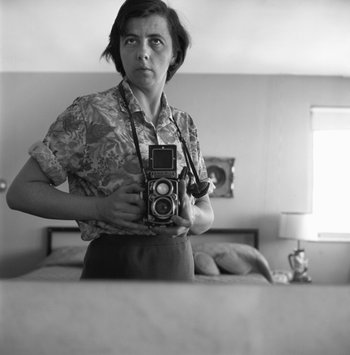
A few years ago a Chicago photography collector named John Maloof was at an auction of goods that had been abandoned in storage facilities. As he explored through all the junk and boxes, he found one lot that interested him—about 100,000 negatives and many rolls of undeveloped film. He bid $500 and won. What he ended up with was an incredible treasure trove of American street photography. If no one had bid on it, its next stop might have been the landfill.

It was all created over the course of four or five decades by Vivian Maier, whose day job was a nanny for well-to-do families in cities such as Chicago, New York, and L. A. Her work was stunningly good—worthy of comparison with great names like Robert Frank, Diane Arbus, Lisette Model, and Weegee. And until Maloof and a couple of other collectors discovered it, no one ever knew that it existed. Because Maier—who clearly suffered from some sort of OCD—had never let anyone see it. As one of her employers said about her, she would have been mortified at the discovery of her work, at the idea that others could see her photography.

20121102-lens-maier-slide-M2IV-custom6

The documentary Finding Vivian Maier tells Maier and Maloof’s stories and shows a broad cross-section of her striking street photography. You can see a trailer for the film here. And the story is far from over. A distant relation of Maier’s has claimed ownership of copyright of all of her work. (In the U.S. you can own a negative, but the copyright belongs to its creator or its creator’s estate.) So for now, her work is tied up in the courts.

Finding Vivian Maier struck a particular chord with me because in my high school and college days I was a dogged street shooter myself. My output was much smaller—only five or six thousand negatives. And instead of the vivid, in-your-face style that Maier cultivated (think Arbus and Frank), my inspiration was the more austere and abstract approach of the great Henri Cartier-Bresson.

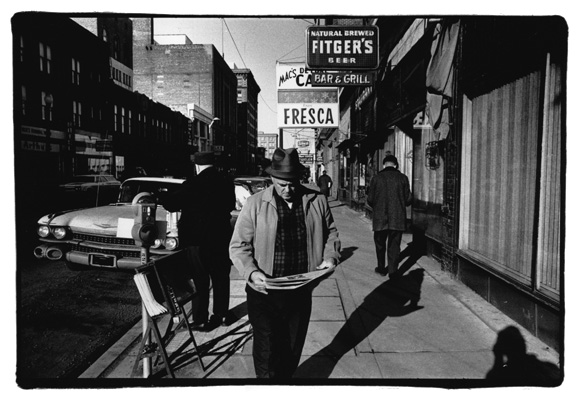
Street photography has been on my mind. I’m in the process of getting a few hundred of my shots into high-res digital files, so I can produce high-quality prints as I need them. Here’s a shot from my first autumn on the streets: First Street, Duluth, 1968.

1968 First Street


Leave a comment

King Harald Featured on Popular Cozy Mystery Blog

Lori Caswell’s Escape with Dollycas is one of the top blogs devoted to cozy mysteries and their authors. So I was delighted when, a few months ago, she agreed to review my new King Harald mystery. And not only did she want to read King Harald’s Heist, but also the first book, The Karma of King Harald. Well, today her very positive review of Karma appeared, and I couldn’t be happier with it. Here’s one of the highlights:

King Harald has stolen my heart. I especially like the chapters told from his point of view. His supporting characters are pretty eccentric which is perfect for a cozy mystery. They are so unique and wonderfully written.

You can read Lori’s full review of Karma here.

And here’s her terrific review of my second book, King Harald’s Heist, along with my guest post.

Here’s what Lori had to say:

This is an outstanding follow up to The Karma of King Harald.  It is an easy read with fantastic dialogue and a top-notch whodunit. The characters are fun and engaging. I so love Harald. There is plenty of mystery, mayhem, and humor and Andy and Harald are in the middle of it. This was one of those books that once I picked it up I couldn’t put it down. Now I want more. I can’t wait for Harald and Andy’s next adventure.


Screen Shot 2015-07-28 at 6.54.08 AM


1 Comment

Now take your medicine like a good tree.

elm2_edited-1

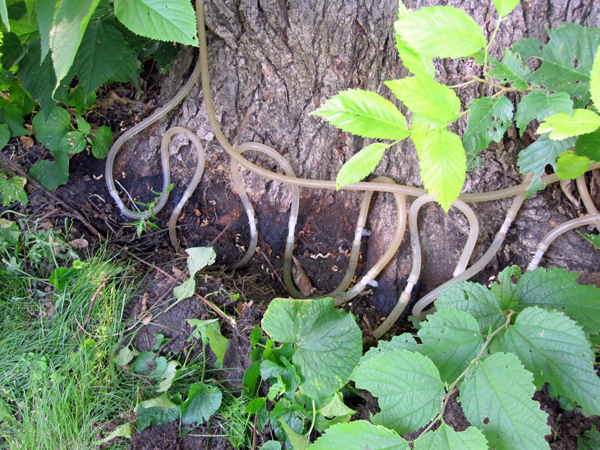
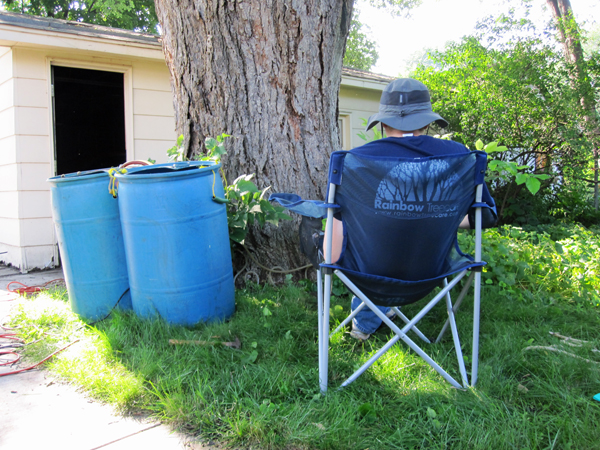
My wife and I have lived in our Minneapolis bungalow longer than we care to admit. And one of the great privileges we have enjoyed all these years is the shade afforded us by a very large elm tree in our backyard. Its trunk at the base is about 14 feet in circumference and we estimate it’s at least 70 years old. But with such privileges comes great responsibility. We don’t own the tree. We are its stewards. Because we don’t want to lose it, we have it inoculated against the deadly Dutch elm fungus every three years.

And today was the day our elm took its medicine. Two big barrels full of the anti-fungal agent were pumped into the tree’s roots over the course of about three hours. It’s important that this magnificent tree stays alive and thrives, so future owners of our little bungalow can enjoy its wonderful shade as much as we have.

rainbow1rainbow2


Leave a comment

King Harald Reviewed in the St. Paul Pioneer Press

Most of the book reviews I’ve sought out have been with bloggers and folks who review on Amazon and Goodreads. But someone recently suggested I get in touch with the St. Paul Pioneer Press’s book reviewer, Mary Ann Grossmann. She makes it a point of regularly covering local small press and indie authors. (Many newspapers won’t even look at indie-published books.)

Well, I dropped off copies of both King Harald books a few weeks ago and last week heard back from Ms. Grossmann. She wrote me that she loved King Harald and ran a really nice review yesterday. Pretty cool. In fact, the review gave me a little bump in Kindle sales—always welcome.

Here’s Ms. Grossmann’s takeaway: “This series is as much about small-town life as it is about crime. The human characters are likable, and Harald is a big, happy dude who doesn’t know he’s a crime sniffer. He just does his doggie thing — rambling around town, worrying about The Boss, chasing squirrels and following his nose wherever it takes him. Which usually means trouble for Andy.”

To read the whole review, just click here.


Leave a comment

The Hardy Boys & Me

It’s a story I often tell—how I became afflicted with the writing bug.

I was a pretty voracious reader as a kid, consuming several books every month. One of my favorites was the Hardy Boys series, in which two upright, teenaged brothers solved baffling mysteries in their New England home town. I gobbled the things up from the library and built my own collection. They were written by Franklin W. Dixon.

After a while it dawned on me that this person, this Mr. Dixon, was sitting somewhere writing these things—undoubtedly in a study full of books in a mansion, puffing on his pipe and stroking his beard. I wanted to be that guy when I grew up. So I started writing and am still writing up to this day. I can’t stop. So far, no mansion or pipe, but I did have a beard for a while.

48643

Of course, Mr. Dixon’s story is rather different than I imagined. In fact, he never existed. He was the creation of the Stratemeyer Syndicate. All those Hardy Boys adventures (and Nancy Drew and Tom Swift) were cranked out, over the years, by dozens of freelance ghostwriters—anonymous and cheap. A piece in The Atlantic recounts the Stratemeyer strategy and how it presaged the way much online writing is done today—by underpaid writers who can take it or leave it. You can read it here.

The way the system worked is that editors at the Stratemeyer Syndicate came up with outlines for their books, which were sent off to the freelancers to turn into complete manuscripts—which then went through a thorough editing process. Here’s what one of the early Hardy Boys outlines looked like.

For anyone thinking of becoming a writer, be aware of this: Writing is a commodity just like any other. There is nothing easy or glamorous about it.